
Attic insulation removal cost
By Insulation Report Editorial. Last reviewed August 2026. How we research this.
In brief
Clean, easy-to-reach blown-in removal runs about $1.00 to $2.00 a square foot. On a 1,200 square foot attic that is roughly $1,200 to $2,400. Batts come out a little cheaper, because you lift them by hand. Fouled material costs more, about $2.00 to $4.00 a square foot. That means rodent, bat or mold damage.
It has to be bagged carefully, thrown out as contaminated waste, and followed by cleaning and treating the attic floor. Vermiculite is a licensed trade of its own. It is usually priced as a whole job, not by the square foot.
Three things explain most of the gap between two quotes: hauling the waste away, air sealing, and treating the floor. Any of the three can be quietly left out. Ask for each one as its own line and most of that gap disappears. Get the attic floor area in writing too. Every per-square-foot number rests on it.
How these numbers were put together
What you are paying to arrive at
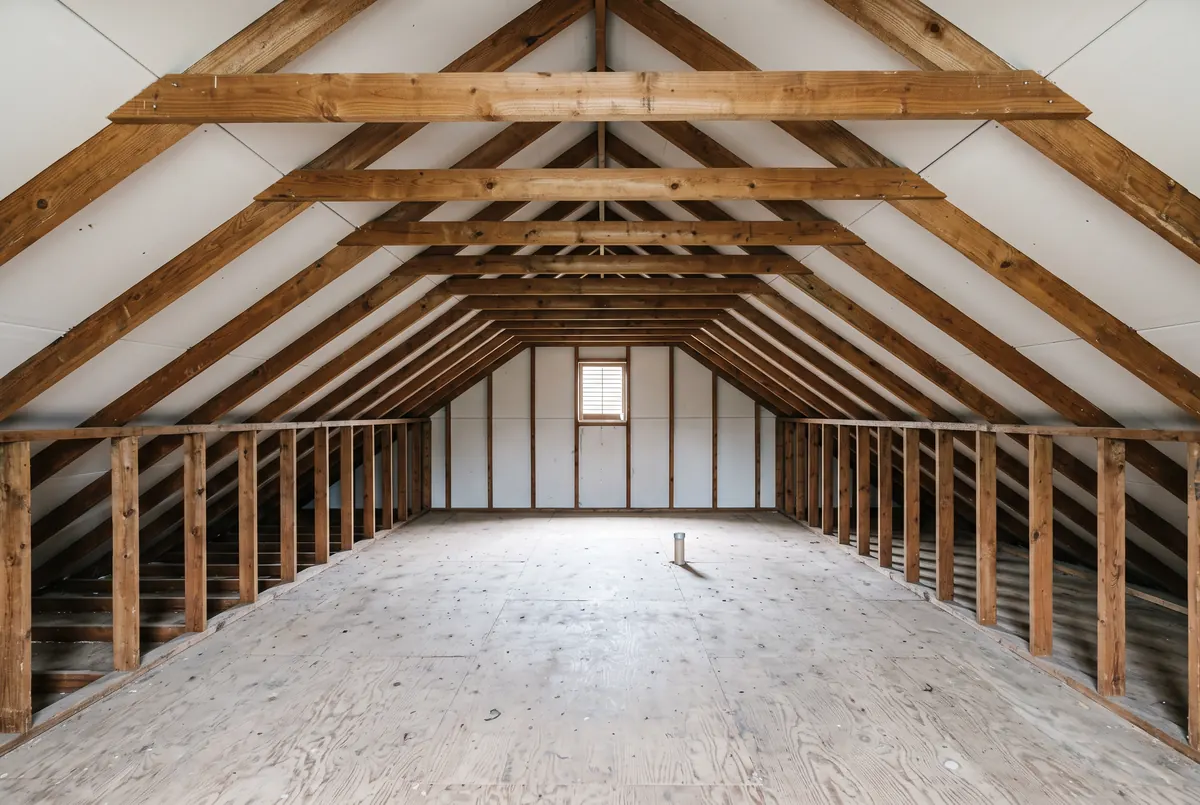
A stripped deck is the deliverable of a removal job, and it is worth nothing on its own. The value is in what goes back, which is why the two are almost always quoted together.
Every price on this page comes from ranges contractors published or quoted in 2026, worked out per square foot of attic floor. They are typical ranges, not quotes. No number here is a promise about your house.
A range with no source behind it cannot be checked. And insulation prices change enough from region to region that a national number with no warning attached is nearly useless. Where a number is our estimate rather than a published price, we say so.
Cost by attic size
Clean blown-in removal from an attic you can get into, at $1.00 to $2.00 a square foot. The numbers come from removal prices contractors published in 2026, by the method above. They are typical ranges, not quotes. They do not come from the Insulation Report Cost Model, which prices putting insulation in, not taking it out.
| Attic floor area | Typical range | Roughly |
|---|---|---|
| 600 sq ft | $600 to $1,200 | Small single-story or a partial attic |
| 1,000 sq ft | $1,000 to $2,000 | Common on a modest single-story |
| 1,200 sq ft | $1,200 to $2,400 | The reference case used elsewhere on this site |
| 1,500 sq ft | $1,500 to $3,000 | Larger single-story footprint |
| 2,000 sq ft | $2,000 to $4,000 | Large footprint, often with access complications |
Cost by condition
Figures: contractor-published removal price ranges current in 2026, per the method above. The vermiculite row is not a per-square-foot trade at all, so it carries a project range instead.
| Condition | Per sq ft | Why it costs more |
|---|---|---|
| Batts, clean and dry | $0.80 to $1.50 | Lifted and bagged by hand, no vacuum needed |
| Blown-in, clean and dry | $1.00 to $2.00 | The baseline. Vacuum, hose runs, bagging |
| Rodent or bat contaminated | $2.00 to $4.00 | Containment, careful bagging, contaminated disposal, deck cleaning and treatment |
| Water damaged or moldy | $2.00 to $4.00 | As above, plus the underlying leak has to be found and fixed separately |
| Fire and smoke damaged | $2.50 to $4.50 | Odor treatment of the deck and framing, often alongside a wider restoration |
| Vermiculite or confirmed asbestos | quoted as a project | Licensed abatement, containment, permits, air clearance testing. Often $3,000 to $8,000 or more |
What drives the price within a range
| Factor | Effect |
|---|---|
| Access | The largest swing factor after region. A pull-down ladder into a low attic with no walkway can add half again to the labor, because every bag is dragged to a single hatch |
| Depth of existing material | Priced by floor area, but 14 inches takes far longer to clear than four |
| Distance to the truck | Vacuum hose has practical limits. A long carry or an awkward exterior route adds time |
| Disposal | Bagged loose fill is bulky, and some facilities charge by volume rather than weight. Frequently a separate line |
| Obstructions | Ductwork, stored belongings, knob-and-tube wiring and low headroom all slow the work and some require assessment first |
| Region | Labor rates move these ranges more than anything else on this list |
The costs that get left out of quotes
Disposal is a line, not a rounding error
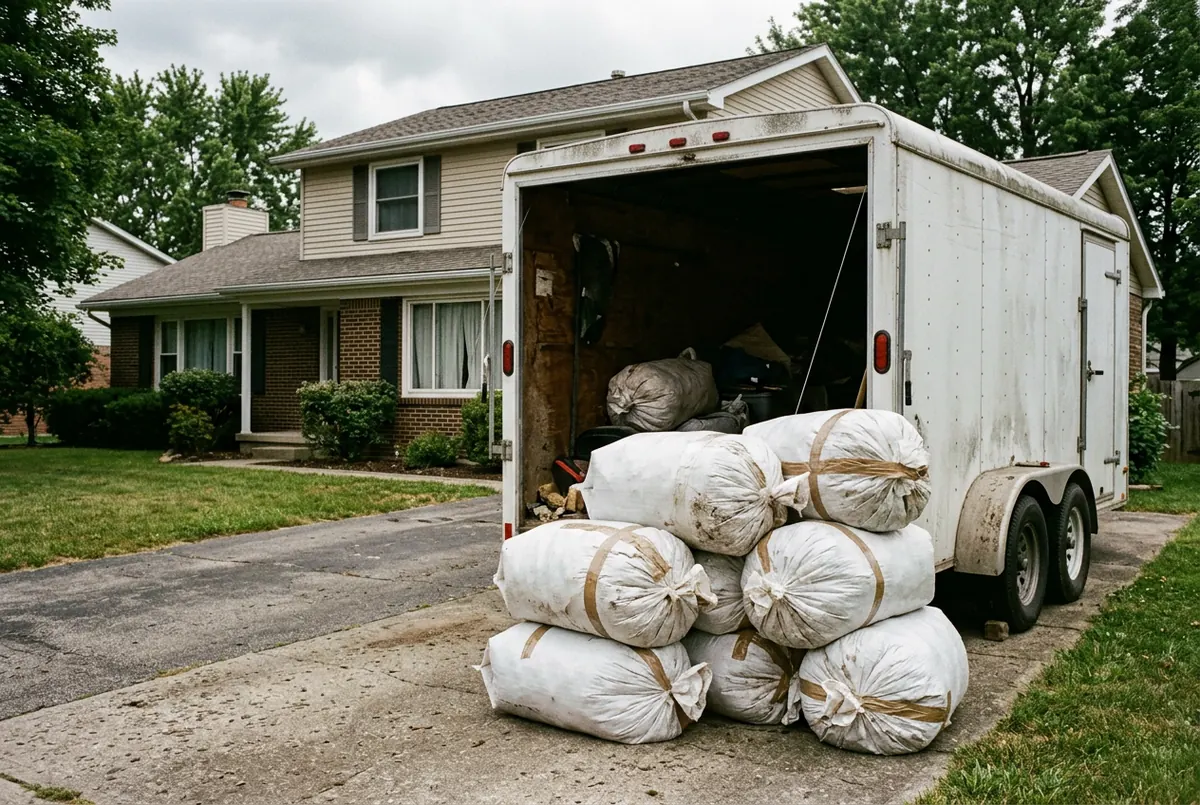
Removed insulation is bulky, light and dirty, so it is priced by volume and by trip rather than by weight. Ask whether the quote includes hauling it away or only bagging it.
These are the three that most often explain a gap between two bids for what sounds like the same job.
- Air sealing. Sealing the ceiling penetrations while the deck is bare adds roughly $0.50 to $1.50 per square foot. It is also where most of the actual energy saving comes from, so a quote that omits it is cheaper and worse. Ask whether it is included, itemized, or absent.
- Disposal. Sometimes bundled, sometimes a separate charge of a few hundred dollars. Not a hidden fee if it is disclosed; a nasty surprise if it is not.
- Cleaning and treating the attic floor. On a fouled job, HEPA vacuuming plus a treatment that kills what is left is the difference between taking the material out and taking the problem out. Cheap quotes on dirty attics often skip it.
Removal alone, or removal plus replacement
Most people are not buying removal on its own. They want an attic that works at the end of it. Combined pricing on a 1,200 square foot attic. Figures: contractor-published combined-scope ranges current in 2026, per the method above; typical ranges, not quotes.
| Scope | Typical total |
|---|---|
| Removal only, clean | $1,200 to $2,400 |
| Removal plus air sealing | $1,800 to $4,200 |
| Removal, air sealing and new blown-in | $4,200 to $7,800 |
| Contaminated removal, treatment, air sealing and new insulation | $5,500 to $10,000+ |
Before you accept any of these, check whether you need removal at all. On most attics the answer is no. The cheaper path is to add new material over the top. The remove-or-add-over guide runs that test in five steps.
Get itemized quotes for removal
Give us the job and your ZIP. We pass it to a licensed contractor in your area who can quote the scope properly.
A marketing service, not a licensed contractor. Insulation work is performed by independent licensed local contractors.
- What happens next?
- Your request goes to a licensed insulation contractor near you, usually within about an hour during the day.
Can you cut the cost by doing it yourself?
Partly, and less than the labor share suggests. Doing the tear-out yourself on a clean, dry, accessible attic removes the largest line, but you take on:
- Insulation vacuum rental, typically a day rate plus bags
- Protective equipment: a fitted respirator, goggles, gloves, disposable coveralls
- Disposal of a large volume of bagged material, which may be charged by volume
- The physical work, in an attic that will be very hot by mid-morning
It is a fair option for dry, clean material in an attic you can walk in. It is the wrong call for anything that might be vermiculite, for rodent droppings, or for mold you can see. And some contractors will not warranty new insulation blown over an attic floor they did not prepare themselves. See how insulation vacuums work.
Common questions
How much does it cost to remove attic insulation?
Contractors usually charge about $1.00 to $2.00 a square foot for clean blown-in insulation in an attic they can get into. On a 1,200 square foot attic that is roughly $1,200 to $2,400. Fouled material runs about $2.00 to $4.00 a square foot. It has to be bagged, thrown out as contaminated waste, then cleaned up and treated.
Why are removal quotes so different from each other?
Usually because they are not quoting the same job. Three things differ most often. Hauling the waste away, which is sometimes billed on its own. Air sealing, which is often left out. And treating the attic floor on a fouled job. Ask each contractor to price those three as separate lines. Most of the gap will vanish.
Is removal cheaper if I do the tear-out myself?
It cuts out the labor, which is most of the cost. But you save less than you would think. You still rent an insulation vacuum, buy protective gear, and pay to get rid of a lot of bagged material. And some contractors will not warranty new insulation blown over an attic floor they did not prepare themselves. It is a real option for dry, clean material in an attic you can walk in. It is a poor one otherwise.
Does insurance pay for insulation removal?
It can, if the cause is something your policy covers. A burst pipe, a roof leak from a storm, a fire. Then removal is normally part of the repair. But taking out insulation because it is old, settled or too thin counts as upkeep, and that is not covered. Many policies also rule out rodent damage on purpose. Read your own policy.
What should be included in a removal quote?
Ask for all of this: the attic square footage, what the material is and what shape it is in, how they will seal off the space, how they will get it out, what disposal costs, whether they clean the attic floor, whether they treat it, and whether air sealing is included. If new insulation is part of the job, get the target depth in inches and the target R-value too. A quote that hands you one number and no detail cannot be compared with anything.